
Wines for Christmas Lunch: A Practical Australian Guide
Choosing wine for Christmas lunch is easier when you begin with the food rather than the label. An Australian Christmas table may move from oysters and prawns to glazed ham, roast meats, salads, cheese and dessert—all on a warm summer afternoon.
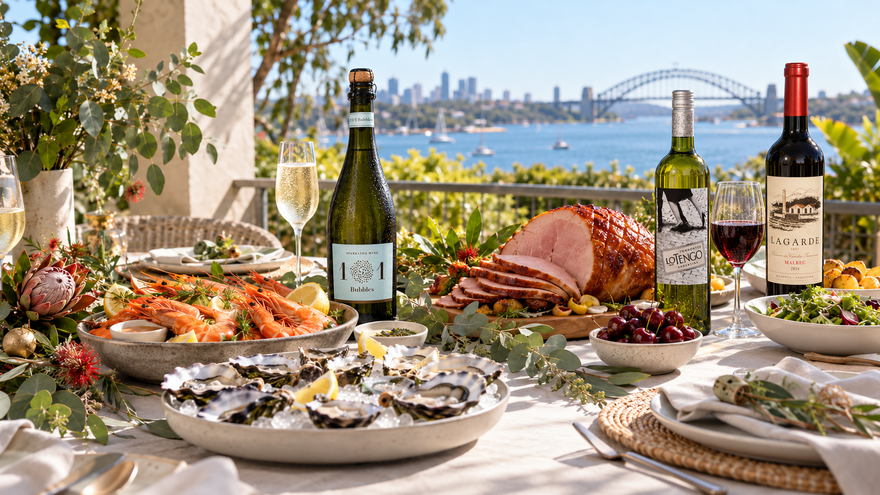
No single bottle needs to cover every dish. A simple progression of sparkling wine, a fresh white and a versatile red gives guests useful choices without overcrowding the table.
If you want a straightforward starting point, build the table around three recognisable styles: 101 Bubbles for the welcome drink, Lo Tengo Torrontés for seafood and salads, and a fruit-led Lagarde Malbec for glazed ham or grilled meat. Availability can change, so confirm the current vintage and stock before ordering.
The simple Christmas lunch wine plan
For a mixed group, begin with three styles:
- Sparkling wine for arrival, seafood appetisers and the first toast
- Aromatic or crisp white wine for prawns, fish, salads and lighter sides
- Medium-bodied red wine for glazed ham, beef, lamb and roasted vegetables
Add rosé when the meal is informal or the menu moves between seafood, salads and charcuterie. The goal is not to find a perfect technical match for every plate; it is to offer wines that stay fresh, suit the weather and work across several dishes.
Sparkling wine for arrival and seafood
Sparkling wine is a practical way to start because it feels celebratory and its freshness suits salty, crisp and fried appetisers. Serve it with oysters, prawns, smoked salmon, canapés or cheese straws while people arrive.
A dry sparkling style is usually the most flexible. Its acidity refreshes the palate, while the bubbles keep the opening of the meal light. Wine Australia recommends serving sparkling wine at about 8–10°C. Keep unopened bottles chilled and return opened bottles to an ice bucket between pours.
For a bottle with an Argentinian connection, 101 Bubbles Sparkling Wine is a useful place to begin; check the product page for current availability before planning quantities.

White wine for prawns, fish and salads
Australian Christmas food often calls for a white wine with freshness rather than heavy oak.
Torrontés for fragrant, herb-led dishes
Argentina's aromatic white grape is a distinctive choice with grilled prawns, citrus-dressed salads, fresh herbs and gently spiced food. Torrontés may smell floral and generous, but most table-wine examples are dry. This makes it useful when a dish combines fragrance, spice and acidity.
If your guests usually drink Sauvignon Blanc or Riesling, Torrontés offers a new style without becoming difficult to pair. Read our Torrontés wine guide for more detail.
Lo Tengo Torrontés, featured in the photography, is a useful example of this aromatic, dry style. Use the current white-wine collection to find an available bottle before ordering.
Sauvignon Blanc for a crisp, familiar option
Sauvignon Blanc works well with oysters, prawns, grilled fish, goat cheese and green salads. Its citrus and herbal character can echo dressings and fresh herbs, although very sharp vinaigrettes may make any wine taste softer.
Other fresh whites
Arneis and Grüner Veltliner can also suit a summer table. Look for a clean, dry style when the food is light. Product availability and vintages change, so use the current white-wine collection to compare what is in stock.
Rosé for a relaxed summer table
Dry rosé is useful when lunch includes charcuterie, prawns, salmon, tomato, salads and lighter grilled food. It sits comfortably between white and red wine and can continue through several courses.
Serve rosé well chilled, then allow it to warm slightly in the glass. Avoid leaving the bottle in direct sun; a shaded ice bucket with a mixture of ice and water is more effective than ice alone.
Red wine for glazed ham, beef and lamb
Red wine still belongs at an Australian Christmas lunch, but it should not be served warm from a hot room.
Malbec with glazed ham and grilled meats
Argentinian Malbec often brings plum, dark berry and gentle spice, with a rounded texture that suits glazed ham, roast beef, lamb and barbecued meats. A fruit-led Malbec can handle the ham's sweet-savoury glaze without making lunch feel too formal.
Choose a medium-bodied style for a broad group. A more structured bottle suits beef or lamb, while a softer expression works with ham and roasted vegetables. Our Australian buyer's guide to Argentinian Malbec explains the differences.
Lagarde Malbec, featured in the photography, illustrates this fruit-led style. Compare the current Malbec range and vintage availability before purchase.
Cabernet Sauvignon with richer mains
Cabernet Sauvignon is a stronger match for roast beef, lamb and firm cheese. Its structure can feel too firm beside delicate seafood, so bring it out with the main course rather than at the beginning.
Lightly chill the red wine
On a hot day, place red wine in the fridge for 15–20 minutes before serving. The aim is to make it feel fresh, not cold. Keep it in the shade and top up glasses modestly so the wine does not warm before it is enjoyed.
What about dessert?
Dry table wine can taste sharp or thin beside a very sweet dessert. If you do not have a suitable sweet wine, finish the table wine before serving pavlova, trifle or pudding, then offer coffee or another non-alcoholic drink.
Fresh berries, cherries and a moderate cheese course are easier to place beside the remaining sparkling, white or red wine. There is no need to force a pairing simply because a bottle is open.
How much wine should you buy?
A 750ml bottle gives about five 150ml wine-glass pours. In Australia, a 150ml pour is usually more than one standard drink, depending on the wine's alcohol level, so check the label rather than treating a glass as a standard drink. At a long lunch, people may drink at very different rates, and some will not drink alcohol at all.
Plan around the number of adult drinkers, the length of the meal and the other drinks available. Provide plenty of chilled water and appealing alcohol-free options. It is better to keep unopened wine for another occasion than to encourage people to finish every bottle.
For a gathering where guests' preferences vary, a mixed wine case can be more useful than several bottles of one style. Check the current bottle list before ordering.
Serving checklist for a hot Christmas Day
- Chill sparkling, white and rosé the night before.
- Keep an ice bucket ready with both ice and water.
- Place water on the table before guests arrive.
- Keep all wine out of direct sunlight.
- Cool red wine briefly before the main course.
- Open one bottle at a time and return unused bottles to a cool place.
- Make sure alcohol is served only to adults and encourage responsible enjoyment.
Frequently asked questions
What is the best all-round wine for Christmas lunch?
A dry sparkling wine is the most flexible way to begin. For the main meal, a fresh white and a medium-bodied Malbec cover many common seafood, salad, ham and roast dishes.
What wine goes with prawns at Christmas?
Try dry sparkling wine, Sauvignon Blanc or Torrontés. Choose sparkling for simple chilled prawns, Sauvignon Blanc for citrus and herbs, or Torrontés when the dish includes fragrant herbs or gentle spice.
What red wine goes with Christmas ham?
A fruit-led Malbec is a useful match because its dark fruit and rounded tannins can complement a sweet-savoury glaze. Avoid an excessively heavy or tannic red when ham is the centre of the plate.
Should red wine be chilled in summer?
Yes, lightly. Fifteen to twenty minutes in the fridge can help a red wine feel fresher on a warm day. Do not serve it ice-cold.
Can I serve only one wine?
Yes. Choose the wine for the main food and your guests. A dry sparkling wine, fresh aromatic white or balanced medium-bodied red can each work across several dishes when the menu is kept coherent.
Build a relaxed, useful wine selection
The best Christmas lunch wine plan is generous without being complicated. Start with sparkling, add one fresh white, then choose a red that suits the main course. Keep the bottles at the right temperature, offer water throughout the afternoon and let guests choose what works for them.
Ready to plan the table? Shop wines for Christmas lunch or ask the Brookvale team to help build a mixed order around your menu and guest list.